2026-10-17 ·
Step By Step Guide To Checking For Mold After Winter Rains
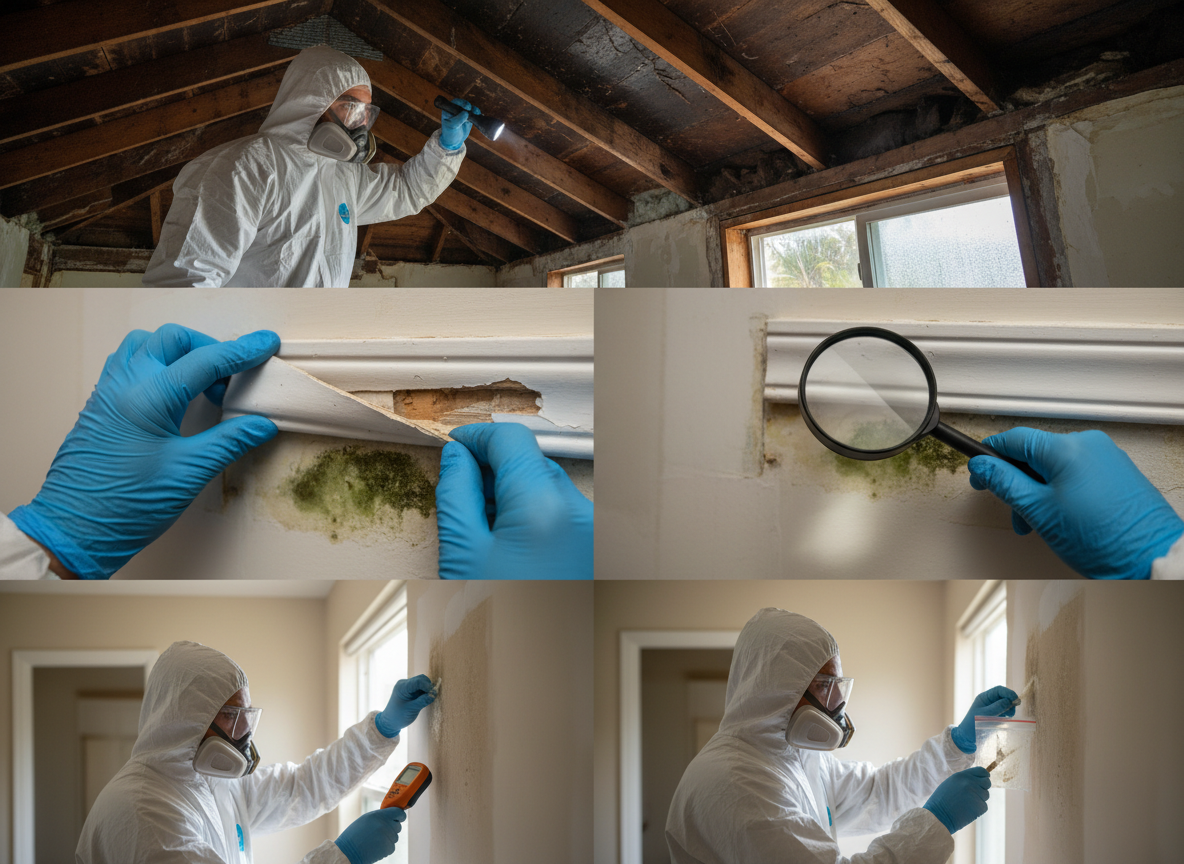
After winter rains pass through Surfside, begin checking for mold within 48 hours by examining attics, bathrooms, and crawl spaces where moisture lingers longest in older Orange County beach cottages. The mild coastal Mediterranean climate keeps summers cool but allows damp air from Pacific storms to penetrate older wood-framed homes near Surfside Beach, Seal Beach, and Sunset Beach. Start at the roofline and work downward, using a moisture meter on drywall and framing to detect readings above 15 percent. Pay special attention to single-story cottages built before 1970 that line Pacific Coast Highway, where roof leaks often travel unseen along ceiling joists. Document every damp area with photos before opening walls or ceilings.
Inspecting Attics and Roof Spaces
Surfside attics trap condensation after winter storms because cool marine air meets warm interior heat rising through older insulation. Climb into the space with a bright flashlight and check along the ridge beam and rafters for dark staining or fuzzy growth on wood surfaces. Measure the depth of any existing insulation; if it feels damp more than 2 inches down, pull a sample and place it in a sealed bag for later testing. Look for water trails running from plumbing vents or skylights that are common entry points in homes along Pacific Coast Hwy. If you find active moisture, increase attic ventilation by clearing soffit vents blocked by insulation before calling for professional assessment. This step prevents hidden colonies from forming in the 8–12 inches of space between ceiling drywall and roof decking typical of local cottages.
Checking Bathrooms and Kitchens
Bathrooms in Surfside homes often develop mold behind tile after winter rains because exhaust fans fail to clear humid air fast enough in the cool coastal climate. Remove the fan grille and shine a light into the duct to confirm it vents directly outside rather than into the attic. Run your hand along the back of toilets and under sinks for soft drywall or peeling caulk that signals trapped water. In kitchens, pull out the dishwasher and check the floor for dark lines along the baseboard where leaks have wicked upward. Older homes near Sunset Beach frequently have cast-iron drains that corrode and drip slowly, so inspect the crawl space access if the bathroom sits above one. Record any musty odor strength on a scale of 1–10 to track whether it grows stronger over the next three days.
Examining Crawl Spaces and Foundations
Crawl spaces under Surfside cottages collect rainwater that runs off the slight slope toward the ocean, creating conditions for mold on joists and subflooring. Enter through the exterior access door and scan the soil for standing water deeper than 1 inch; if present, note the distance from the foundation wall. Check the vapor barrier for tears and feel the underside of floor joists for spongy spots every 4 feet. Homes in Seal Beach and Surfside built on raised foundations before 1960 often lack proper grading, so water pools against the stem wall and evaporates slowly into the living space above. Place a small battery-powered humidity gauge inside for 24 hours; readings above 60 percent indicate ongoing moisture that needs mechanical drying before any surface cleaning.
Knowing When to Arrange Professional Testing
If moisture readings stay elevated after three days of ventilation or you discover more than 10 square feet of visible growth, schedule mold inspection near me rather than attempting removal yourself. Professional teams can reach tight spaces in older Surfside Beach cottages and collect air or surface samples that identify species and concentration levels. Review the related guide on Preventing Mold In Older Surfside Beach Cottages for long-term sealing steps once the immediate check is complete. Residents in nearby Sunset Beach and Seal Beach should also read When To Test Air Quality After A Leak In Surfside Properties to understand how coastal humidity affects post-rain recovery timelines. Contact the team at 16281 Pacific Coast Hwy available 24/7 if readings or odors persist.